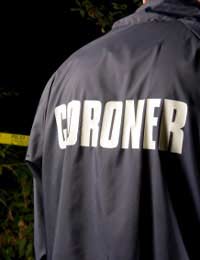
A coroner is a specially trained doctor or lawyer who in certain circumstances investigates the cause of someone’s death. The coroner becomes involved after a death in the following circumstances: if the death was violent, in suspicious circumstances, in prison or police custody, was caused by an industrial disease, while a patient was having an operation, or if the deceased was not previously ill or had not seen a doctor within 14 days before the death, or the cause of death is unknown or uncertain.
The Post Mortem
In such situations, a post-mortem operation is usually necessary to establish the cause of death. One of the deceased’s doctors can ask relatives for this permission. Alternatively permission is not required for the coroner to order this to take place, although the family’s interests can be represented by a doctor at the post-mortem. If the post-mortem examination does not reveal the cause of death, or in certain other circumstances (industrial disease, violent or unnatural death, or death in prison) there will be an inquest.
The Inquest
An inquest is a hearing that determines the cause of someone’s death. This hearing is held in public. Whether or not there is a jury will depend on the interests of the relatives and whether a jury is ‘in the public interest’. Generally, an inquest will be heard by a jury if the death occurred at work, in police custody or prison or if there is a risk that further deaths could occur in similar circumstances to the death in issue. It is important to note that an inquest is not a trial. An inquest establishes the identity of the deceased; how, where and when the death occurred but not who (if anyone) was responsible for it. Blame for the death is determined at a trial in the applicable civil or criminal court, not at the inquest.
The coroner has to inform certain people about the inquest: the next of kin, whether a husband, wife, civil partner or other person, and (if applicable) the personal representative.
Court Proceedings and the Inquest
If there is likely to be a claim for compensation (e.g. death after an accident at work or on the road) it is important that the relatives are legally represented at the inquest. If there are criminal charges to be heard in relation to the death, the inquest should normally be determined prior to the court proceedings. The criminal proceedings may be in the Magistrates’ Court (for example, in relation to a charge for careless driving) or in the Crown Court (for example, for a charge of murder or manslaughter) or be subject to an appeal in one of the higher courts. The inquest is not dependent on the outcome of civil proceedings, although evidence given at the inquest or in criminal proceedings may be of assistance in subsequent civil claims for compensation.
In order to determine the circumstances surrounding a person’s death the coroner may require witnesses to be called to give their account at the inquest. These witnesses must attend, and can face penalties for not attending.
Hearing & Verdicts
A coroner will generally open an inquest and adjourn it for the police and other authorities to gather evidence and other information about the circumstances surrounding the death. The hearing is held at a later stage. Once the coroner or the jury if applicable has determined the facts surrounding the death.
The verdicts that a coroner can return are:
accident
suicide
unlawful or lawful killing
industrial disease
natural causes
open verdicts are returned if there has not been sufficient evidence to prove any other verdict.
Is There a Right to Appeal?
If you disagree with the outcome of the inquest, there are certain circumstances in which you can challenge the coroner’s decision or verdict. An application for judicial review can be made within 3 months of the inquest, but this is a specialist procedure which requires consultation with a lawyer. A fresh inquest can be held at any time.
Related Articles in the 'Different Courtrooms' Category...
My son2013 died in custody. Coroner wrote suicide, No facial injuries or other markings.. Strangulation marking, around neck; mostly in back of neck. My son's (button) part of Nosewas completely broken; facing sideways. No strangulation or marks across front of neckEntire Middle of neck, Chin on down chest; looked completely normal. Both Right & Left Sides of Neck, were (Bing Cherry Deep Red) all the way down to top of chest nipples. As if some heavy laid on side of jugular, shoulder and chest. Scratch marks on outside of both shoulders mid way down.I believe a officer knee? My attorney ignored pictures, allowed coroner report.I personally took several photos with phone.
CORLIARS - 3-Sep @ 4:33 AM
My partner died in hospital after receiving an operation to remove cancer from his tonsils and tongue. He had the operation on the 13th July and discharged the next day. He was vomiting blood on the 19th at home and was taken up hospital. The hospital didn’t act quick enough and lots of miscommunication between the staff. The case has been transferred to the coroners court. We were not leagally married do I have a case.
Dharmendra Patel - 10-Apr @ 9:26 AM
Sarah mum
My son died a year ago he was 28 I'm still fighting for him now . It doesn't matter his put himself as next of kin the coroners officer will go through everything with you as your the mother. my heart goes out to you x
Ellie - 12-Jan @ 1:15 AM
My friends father was killed by a hit and run driver, the person responsible
Was eventually arrested, but only for driving under the influence of alcohol, and pleaded guilty to that spedifice offence. He said that he had hit a wheelie bin.
The case went to coroners court andseveral witnesses reported seeing the incident. The family are trying to get the paperwork from the coroner, are they legally entitled. To the documents. And how do they go about getting them, they need them for insurance purposes.
Zoggler - 22-Sep @ 9:18 PM
My daughter died 6 weeks ago. My ex husband appointed himself as next of kin and every thing I am being told is I am being told by him. He told me the post mortem revealed that she did not die of natural causes and that there is to be a coroners inquest into the cause of her death. Can some one explain to me what this will involve.And am I able to contact the coronerelevant myself and ask for an update. My daughter was 24
Sarah mum - 16-Sep @ 8:36 PM
@Maggie20054 - I am so sorry your son died this way and reading down all the others who've had family and friends that have died in such awful circumstances too - it must be really difficult for you on a daily basis x
AliceB - 2-Sep @ 12:53 PM
@Dury - you're fine if the police and coroner have no reason to suspect his death was anything other than by natural causes!
AliceB - 2-Sep @ 12:48 PM
I looked after an elderly man. He changed his will in july. In August he was sent to hospital and died 10 days later.
No I have to attend an inquest.
Do I have anything to worry about.
Dury - 31-Aug @ 8:23 PM
My partner & father to my youngestSon died in a so called house fire there were many weird events that happened that day the electric went so I took a bus with my Son into town to get electric an some tobacco as we didn't smoke cigarettes. We lived in a very secluded place taking hr just to the shops on the bus, during this time a phone call came via my older Son asking was I ok stating that there was a fire at the house an a body has been bought out my partner was rushed to hospital with smoke damage which later was brain dead an it was just a matter of time waiting to see what the outcome would be be he latest exactlyone month died in my arms.
I couldn't be at the inquiry it was to painful an I didn't believe that he died. It couldn't of been an electric alternative fault as there was no electric there was no smokes either I know my partner and there is no way he would light a fire an just waite to die no never. As I didn't go to the inquiry is it possible for me to read what the coroner said just need answer to many questions wish I had gone but was in no state to now I feel I'll never really know what happened
Kels - 3-Jun @ 9:03 PM
To the lady who's son died from falling off of a balcony. I feel your pain I'm in a very similar situation. My son was celebrating Arsenal winning the cup final with his friend. Then at midnight left to walk home. CCTV shows him in the pub leaving pub and again on his way home somehow this stranger who is married to a man invites him back to his flat played an already drunk man with more booze this man was arrested on suspicion of murder stating no comment my son would be alive now if not for this man.
Maggie20054 - 27-Apr @ 11:59 PM
bombshell - Your Question:
My daughter died august, the coroner said central nerve depression, they have set another inquest date for may now, as she had only prescribed tablets , for depression, do I need a solicitor at the inquest, they say I dont, but I dont know who to believe,
Our Response:
I am sorry to hear of your daughter's death. If you are concerned about the circumstances surrounding her death then you should consider seeing a solicitor. Please see the Inquest link here which should tell you all you need to know. I hope this helps.
CourtroomAdvice - 27-Apr @ 12:20 PM
My daughter died august, the coroner said central nerve depression, they have set another inquest date for may now, as she had only prescribed tablets , for depression, do i need a solicitor at the inquest, they say i dont, but i dont know who to believe,
bombshell - 26-Apr @ 2:57 PM
My g/f had a csf leak which hopital failed to fix this then caused mental staus to change she then took her life while in hospital all medical records are incorrect which means her death was caused by hospital the coroner is trying to cover death up
Delboy - 30-Mar @ 2:17 PM
I would like to make a Freedom of Information request regarding a Hearing/Inquest, who should I send this to? Coroner is ignoring our polite requests.
Thanks
alan - 22-Feb @ 4:45 PM
My Aunties inquest next month, she was found dead outside her flat early hours of the morning her top floor 4 storey flat window was open at the time of death. (She was petrified of heights) She was trying to detox off alcohol someone was in her flat apparently sleeping at the time that she was ment to of through her self out of window.Autopsy has come back no alcohol which is strange for her and drugs which she would never take as she was soo antie police made so many mistakes and not done anything to investigate now looking at it as suicide and toxic at time Need advice really can't but this to bed as not happy if this is the final out come.
mich - 15-Feb @ 4:29 PM
My son died 20th July 2015 I found him dead on my sofa , he had a PM and they cannot find a reason for his death so now nearly 7 months later they are going to open an inquest. What I want to know as his mother do I have to attend the inquest I am so emotionally drained I don't think I could take anymore. So if someone has the answer I would be pleased to hear it
Vonni - 5-Feb @ 10:00 PM
My mum died August 2014 from a care home neglect, had 15 pressure sores when she died , the care home didn't even know she had any at all , so is that neglect, I would say so , got a 4 day inquest coming up soon , I hope we get justice for my mum
Tilli - 28-Jan @ 10:30 PM
My son aged 28 died on the 28th October . The circumstances are very suspicious . 3 men who were in his apartment are saying he was acting strangely high as a kite and jumped off his balcony. This is absolute rubbish. Number one autopsy has given a full clearance for 0% drugs. He had been making plans that evening for the next few days and going back to america. He asked a girl up to his apartmentfor the evening. He wasn't talking to his flat mate wasn't happy with him at all yet his telling police him and my son were great mates. The other guy has also come up with a load of rubbish. The third guy is not answering police messages to come in and make a statement. I'm chasing London police constantly that if it was not so seriousit would be laughable. My son loved life to the max . So the police havevsaidvit wasn't suicide!! Never in a million years. And it wasn't drug related . I want the police to do there job for my sons inquest . He cannot speak for himself so as his mother I must do this last thing for him. My gut fielding and what is coming out tells me this is murder. A fight had broken out and got out of hand.? I just wished they would pull there finger out investigate my sons death as shouldbe done. He maybe a number to them but his my son. And I want to knowe that after returning home 32 minutes later he was dead .
Violet30 - 10-Jan @ 10:35 PM
My son died in a road accident, the police accident investigation unit has finished its enquiries. I have asked for some details such as photos taken at the scene of the accident but these have not been forthcoming. I need these before the inquest in case I need ask any questions or disagree with their findings
Malc - 2-Jan @ 5:40 PM
My mother died when the surgeon put a mechanical heart valve in upside down ! He re used a valve against manufacturers warning instructions causing horrific damage to her heartresulting in her death !!The hospital and doctors covered it up and it took five days to find out about the valve !! Its disgusting that these people who have lives in their hands can be so dishonest andcover their own backs !!I class this as evil at work !My heart goes out to everyone who has and is suffering through losing someone they love this way !!Im not going to give up trying to get justice for my mother !
Jan - 12-Nov @ 5:22 PM
So sorry about your mum cewitt...my daughter died medical negligence...& I am aware of lots of others the coroners court & hospitals cover themselves
trish - 9-Oct @ 9:06 PM
My mum died 8 weeks ago of multiple drug intoxies,there will be an inquest and hearing!my mum died unnessary of an unnatural death!who else are the doctors etc neglecting,it isn't right or fair and they shouldn't get away with it but not sure where to go from here
social-issues Re: Pre-Sentence Reports
Hello, Farheen. The correct answer to your question is, no. We can not shed any light on the reasons why you son's solicitor thinks that his…
22 June 2025
social-issues Re: Pre-Sentence Reports
Hello Rodney, you went through the police interview wirhout a solicitor? Or used the duty solicitor? You've had your probation interview?…
22 June 2025
social-issues Re: Pre-Sentence Reports
Hello, Farheen. It is not clear what you mean when you say that an incorrect law has been used. Incidentally, being unable to communicate is…
22 June 2025
RODNEY Re: Pre-Sentence Reports
My case was adjourned and I have now had my interview with the probation officer. Given that most magistrates courts take the PSR and…
12 June 2025
Farheen Khan Re: Pre-Sentence Reports
My son has a pre sentence report interview. My son cannot communicate and has mental health issues. The solictor has will submit an appeal…
23 April 2025
Vonny Re: Failure to Attend Jury Service
I did jury service in Cardiff Crown years and years ago. I was called into court on the jury. I had 3 cases all dead boring. I…
22 January 2025
Cinders Re: A Guide to Court Orders
Please please if there’s any advice,support or anything else you can help with please let me know, I fled the former marital home in…
8 January 2025
social-issues Re: Pre-Sentence Reports
Hello Emz, I can understand family and health questions. They seem quite reasonable. The focus on eye problems is a bit of a mystery to me,…
2 August 2024
Emz Re: Pre-Sentence Reports
Could anyone help I had a presentence report done and they asked me loads of questions about my kids and partner and also if I have any…
30 July 2024
social-issues Re: Pre-Sentence Reports
Hello, Lucy, I didn't make it clear enough that it's the Probation Service that is being stupid. Fishing isn't the only common mistake that…

Re: Pre-Sentence Reports
Hello, Farheen. The correct answer to your question is, no. We can not shed any light on the reasons why you son's solicitor thinks that his…
Re: Pre-Sentence Reports
Hello Rodney, you went through the police interview wirhout a solicitor? Or used the duty solicitor? You've had your probation interview?…
Re: Pre-Sentence Reports
Hello, Farheen. It is not clear what you mean when you say that an incorrect law has been used. Incidentally, being unable to communicate is…
Re: Pre-Sentence Reports
My case was adjourned and I have now had my interview with the probation officer. Given that most magistrates courts take the PSR and…
Re: Pre-Sentence Reports
My son has a pre sentence report interview. My son cannot communicate and has mental health issues. The solictor has will submit an appeal…
Re: Failure to Attend Jury Service
I did jury service in Cardiff Crown years and years ago. I was called into court on the jury. I had 3 cases all dead boring. I…
Re: A Guide to Court Orders
Please please if there’s any advice,support or anything else you can help with please let me know, I fled the former marital home in…
Re: Pre-Sentence Reports
Hello Emz, I can understand family and health questions. They seem quite reasonable. The focus on eye problems is a bit of a mystery to me,…
Re: Pre-Sentence Reports
Could anyone help I had a presentence report done and they asked me loads of questions about my kids and partner and also if I have any…
Re: Pre-Sentence Reports
Hello, Lucy, I didn't make it clear enough that it's the Probation Service that is being stupid. Fishing isn't the only common mistake that…